Craft field note
A cutting board brought back by hand
Flatten the raised grain, soften the corners, and let clean wood show again.
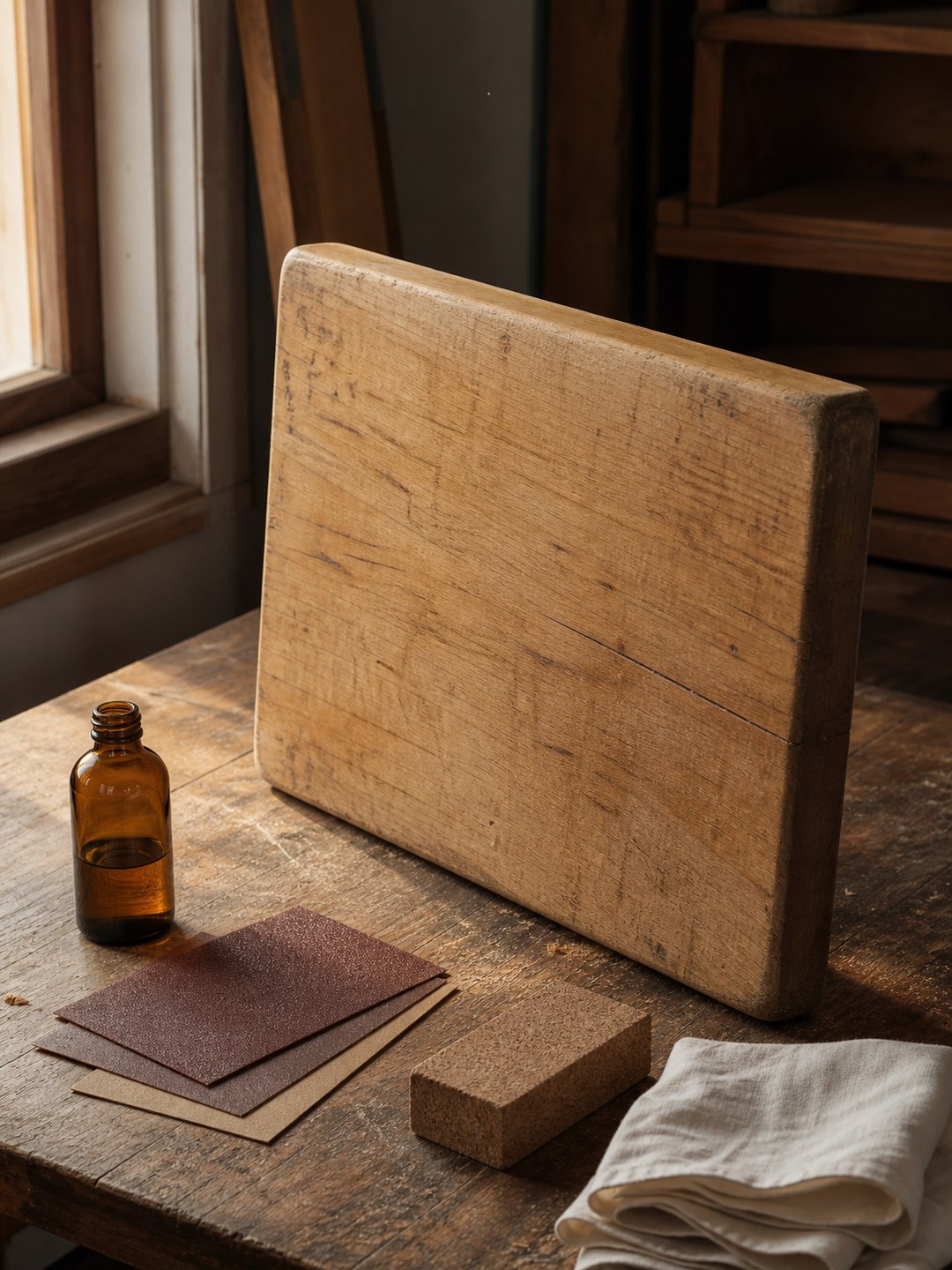
An old cutting board usually needs patient abrasion, not a glossy disguise. Knife marks, a darkened edge, and raised grain are evidence of work; the aim is to make the surface clean and comfortable again without sanding away the board's whole history.
Wash the board, rinse it well, and let it dry completely on edge before deciding what to repair. Deep splits, loose glued joints, persistent mold, or a smell that returns after cleaning are reasons to retire it from food work rather than seal trouble beneath oil.
For a sound board, begin with a firm sanding block and work with the grain. Start only as coarse as the raised fibers require, then move through medium and fine paper, clearing the dust between grits so one trapped particle does not carve a fresh set of scratches.
Keep the block flat across the broad faces and use a few controlled passes to ease a sharp rim. Rounded edges can feel pleasant, but chasing every hollow with fingertips deepens low spots; a level surface matters more than erasing the final knife line.
Vacuum the dust, wipe the board with a barely damp cloth, and let the lifted fibers dry before one last fine pass. Then apply a thin coat of food-safe mineral oil to both faces and every end-grain edge, where thirsty wood takes in moisture fastest.
Stand the board on edge overnight and wipe away anything left on the surface in the morning. Add another light coat only while the wood still drinks it in; after that, wash by hand, dry upright, and reach for the oil when the surface looks chalky rather than because a date arrived.