Craft field note
A sweater lesson in patient gauge
The useful swatch is washed, rested, and large enough to tell the truth.
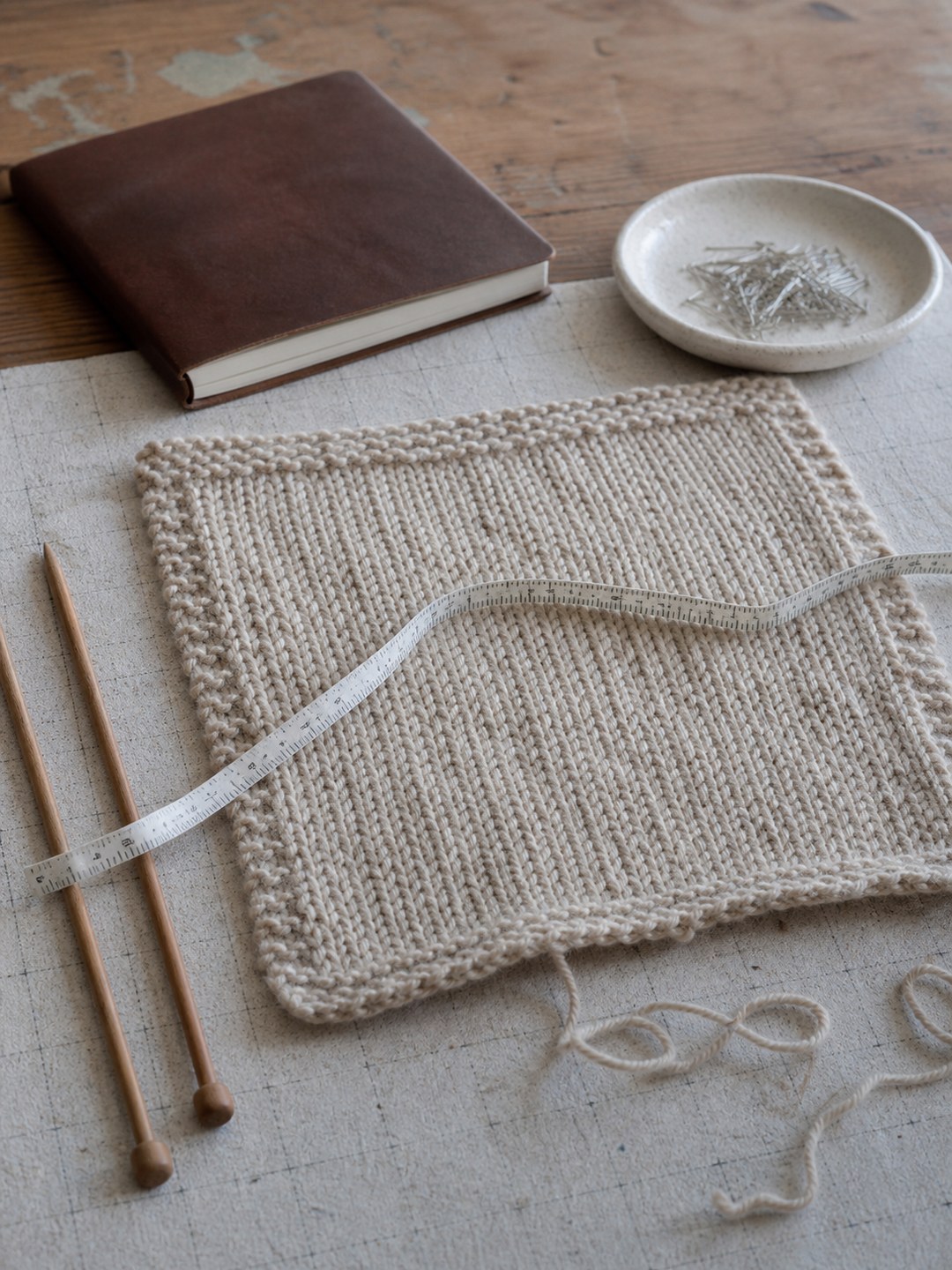
A sweater begins long before the first sleeve, in a square of knitting that is easy to resent because it does not look like progress. The honest swatch is not a tiny strip made only to produce a number; it is a sample of the fabric the finished garment will actually become.
Cast on enough stitches to place the pattern's measuring window well inside the edges, and work several repeats of any cable, rib, or color pattern used in the sweater. A broad border keeps curled edges and cast-on tension out of the part you will count.
Wash the swatch exactly as you intend to wash the garment, using the same water temperature and handling. Lay it flat without stretching it to the hoped-for size, let it dry completely, then give the relaxed wool several more hours before measuring.
Count stitches across the calm center in more than one place, and count rows too when sleeve length or a shaped yoke depends on them. Move the tape rather than tugging the fabric under it; a swatch that changes under the ruler is still telling you something useful about the cloth.
When the stitch count is off, change needle size and make another washed sample. When the count is right but the fabric feels stiff, loose, or unlike the photograph, try a different needle material or yarn before accepting a sweater whose measurements work only on paper.
Label the finished swatch with the needle, yarn, and washed gauge, then keep it with the remaining yarn. It can settle a future question about washing, test a repair, or become a pocket, and the notes will be far more helpful than trying to remember which pleasant square told the truth.