Craft field note
Visible mending as a record of use
A worn elbow can hold a quiet grid of thread instead of pretending nothing happened.
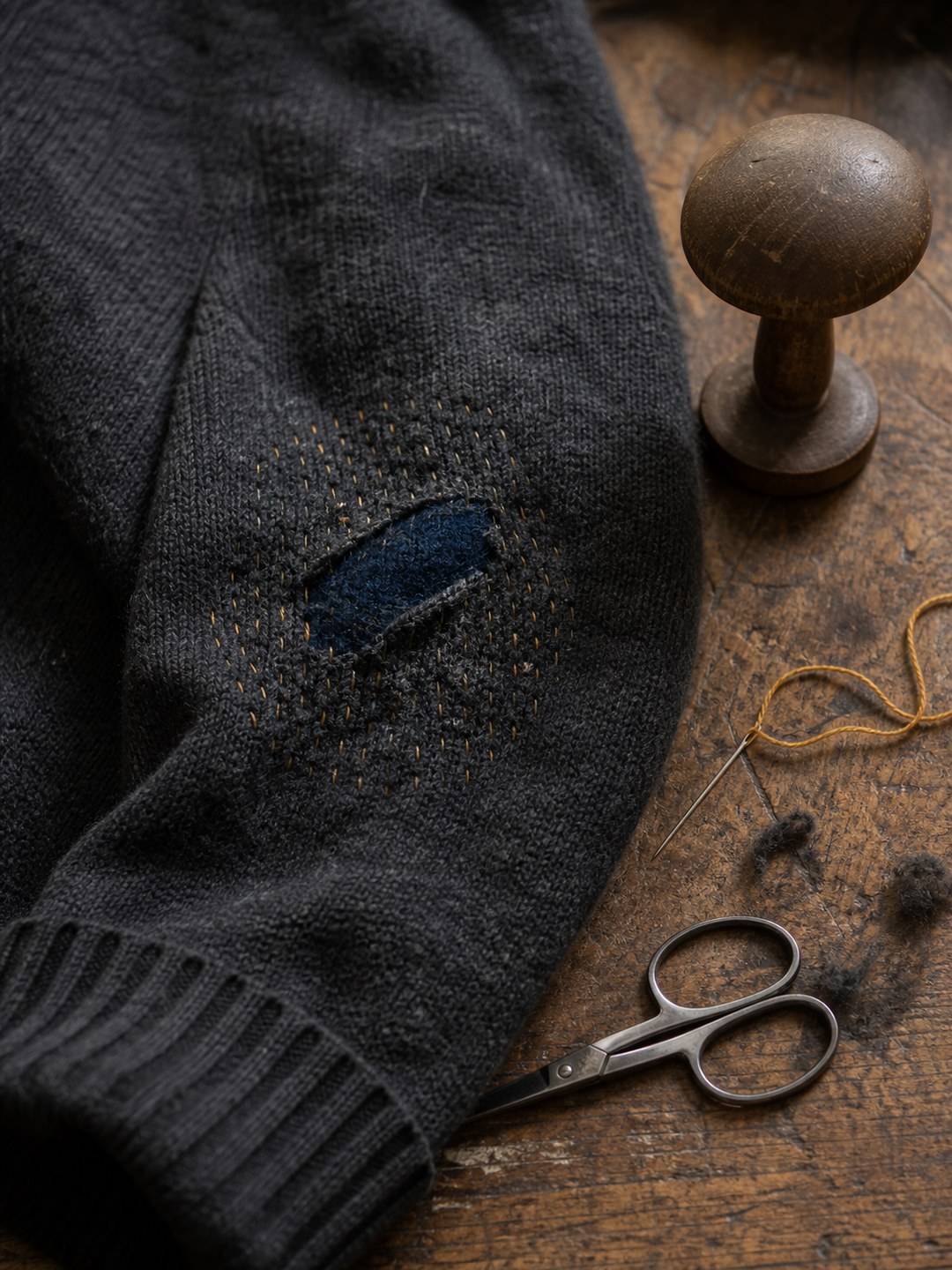
Visible mending works best when the repair follows the stress that made the hole, not when decoration is laid over weak cloth. The worn elbow tells you where the garment bends and rubs, so begin by looking beyond the opening for the thin halo that will fail next.
Turn the garment toward a window and mark the full weak area with loose basting thread. Trim only fibers that are truly detached; the fuzzy edge still helps the old cloth and the patch settle into one surface after washing.
Choose a patch with a similar weight and care routine, then place it behind the damage with its grain running in the same direction as the garment. It should extend into sound fabric on every side, without becoming so large and stiff that the elbow simply creases at a new border.
Baste the patch flat before beginning the visible stitches. Work parallel rows of small running stitch across sound cloth, the worn area, and sound cloth again, changing direction on the next pass if the fabric needs support both along and across the grain.
Thread does not need to disappear. A deliberate shade one step lighter or warmer than the garment often looks calmer than an almost-match, but its fiber and wash requirements should remain compatible; strong embroidery thread pulled too tight can cut into a delicate knit.
Remove the basting, wash the garment as usual, and shape it while damp so the patch and original cloth relax together. When it is dry, inspect the outer rows for strain and add a few stitches where the fabric still lifts; the finished grid should share the wear, not pin the hole inside a decorative frame.