Garden field note
What green tomatoes are telling you
Late fruit needs sunlight, steady roots, and fewer promises from the vine.
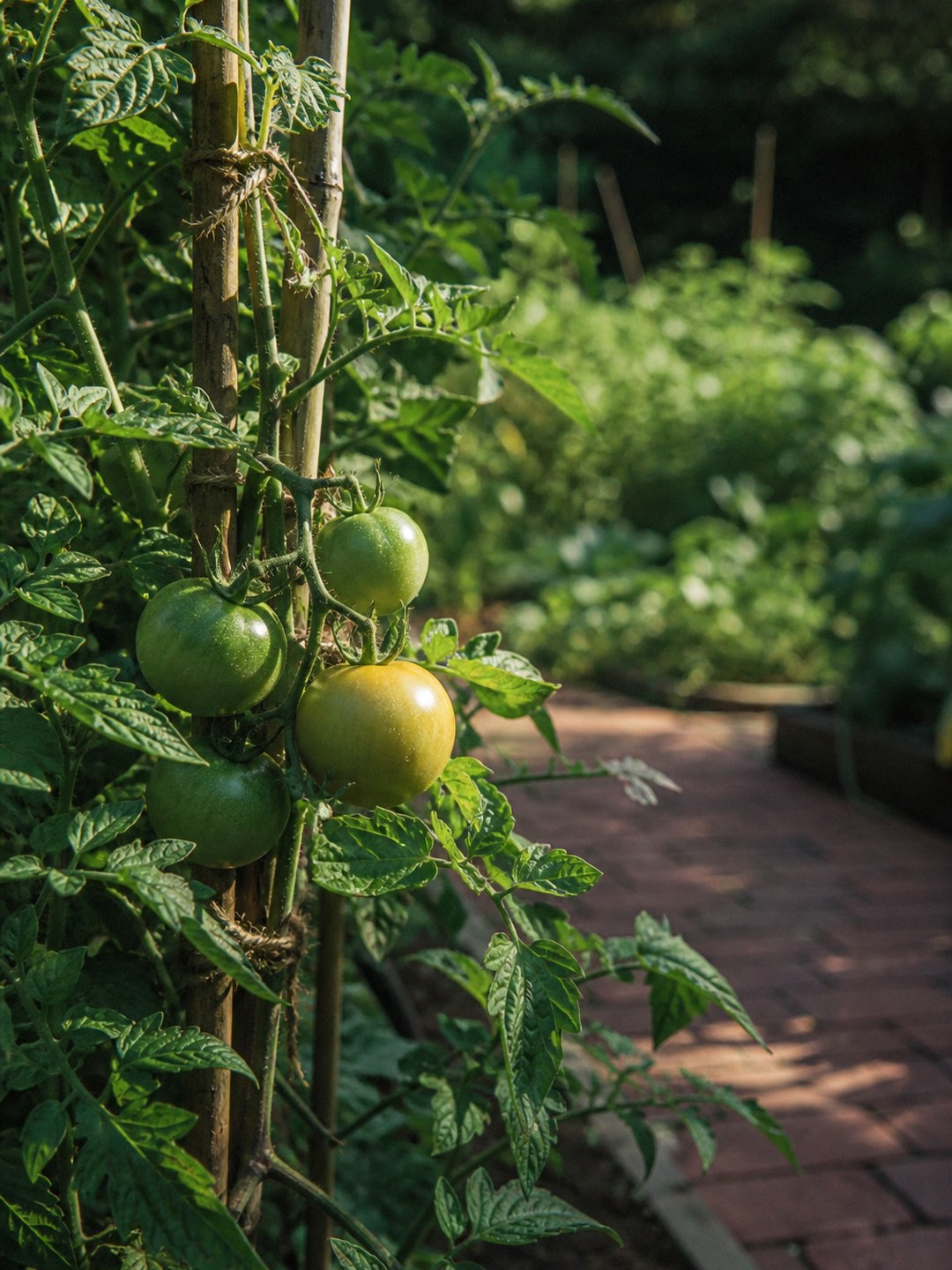
Green tomatoes near the first cool nights are less a crisis than a question of where the plant should spend its remaining energy. The vine is still working, but the calendar has changed; the useful move is to choose which fruit has time to finish rather than asking every flower to become October lunch.
Begin at the tips. Pinch off new blossoms and fruit no larger than a marble, then remove yellowing leaves that no longer contribute much. Leave the healthy canopy intact: those leaves are feeding the remaining clusters and protecting them from the hard afternoon sun.
Light thinning is enough when a dense branch shades the largest fruit all morning. Cut the whole leaf stem cleanly at its base instead of tearing leaflets away one by one, and stop before the plant looks bare. An over-pruned vine loses both its shade and much of the engine that moves ripening along.
Watch the fruit itself rather than waiting only for red. A tomato that has shifted from deep matte green to a paler, glossier green and gives the slightest amount at the blossom end has entered the breaker stage; it can finish indoors if cold rain or a sharp night is coming.
Bring promising fruit inside in a single uncrowded layer, shoulders down, away from direct sun. Check it every few days and remove any tomato with a soft spot before it affects its neighbors. A ripe apple nearby can speed the process, but a closed bag makes it too easy to miss decay.
The firmest dark-green fruit can go to the kitchen on purpose instead of being treated as a failed red tomato. Keep the pale breakers for slicing later, set aside sound green fruit for frying or a small batch of relish, and pull the exhausted vines only after the last useful sorting is done.