Garden field note
The late-summer herb bed asks for scissors
A small round of cutting now gives basil, thyme, and mint a more useful second act.
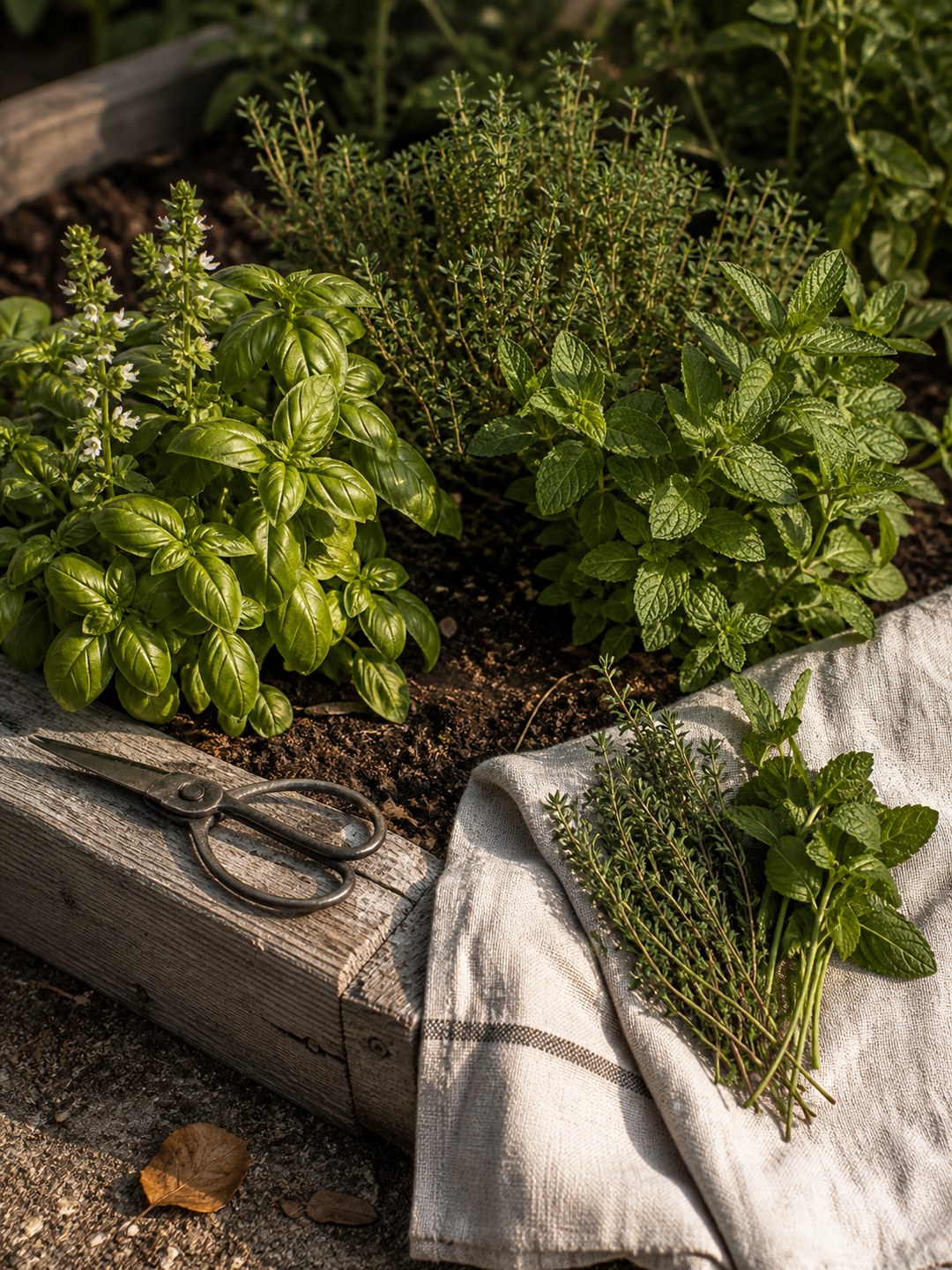
Basil gets theatrical at the end of summer, throwing flower spikes above leaves that have begun to thin. The display is lovely for pollinators, but a few deliberate cuts can keep part of the bed tender for the kitchen while still leaving blossoms at the back.
Follow each basil stem down to a healthy pair of leaves and cut just above the node, taking no more than a third of the plant at once. New side shoots will form there; clipping only the top leaves produces a basket today but leaves a tall, increasingly woody plant behind.
Thyme wants a lighter hand. Shear the soft green tips in small handfuls and leave the bare woody base alone, then comb through the plant for browned stems that can be removed individually. That keeps the low cushion open without asking old wood to sprout on command.
Mint can take the firmer reset. Cut lank stems back to a low set of leaves, clear away fallen foliage, and water the root zone deeply afterward. If it shares a bed, pull wandering runners while the soil is soft; the trimmings are useful, but the boundary is part of the harvest too.
Gather what you plan to keep before the afternoon heat and shake off insects outdoors. Wash only the herbs that need it, spin or blot them completely dry, and spread the rest on a clean towel out of direct sun before bundling, freezing, or hanging small bunches.
The finished bed should still look like a garden, not a row of stumps. Leave some basil flowers for bees, some thyme in bloom, and enough mint leaf to power regrowth; the point of the scissors is a useful second act for both the kitchen and the plants.