Today's work ·
The pepper mill that made grind size part of the recipe
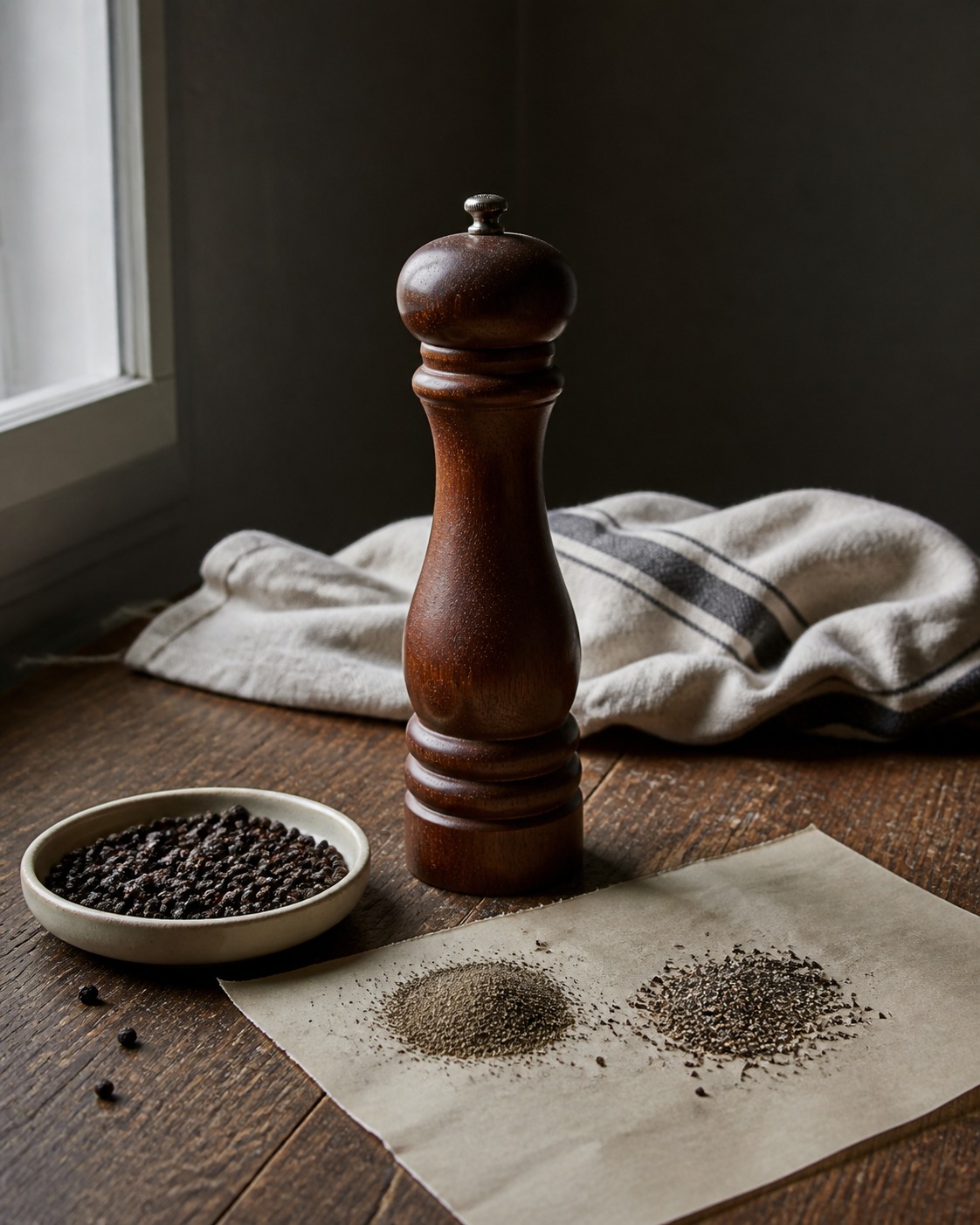
Three small piles—fine, middle, and coarse—turned an everyday pepper mill into a more deliberate kitchen tool.
Who it’s for
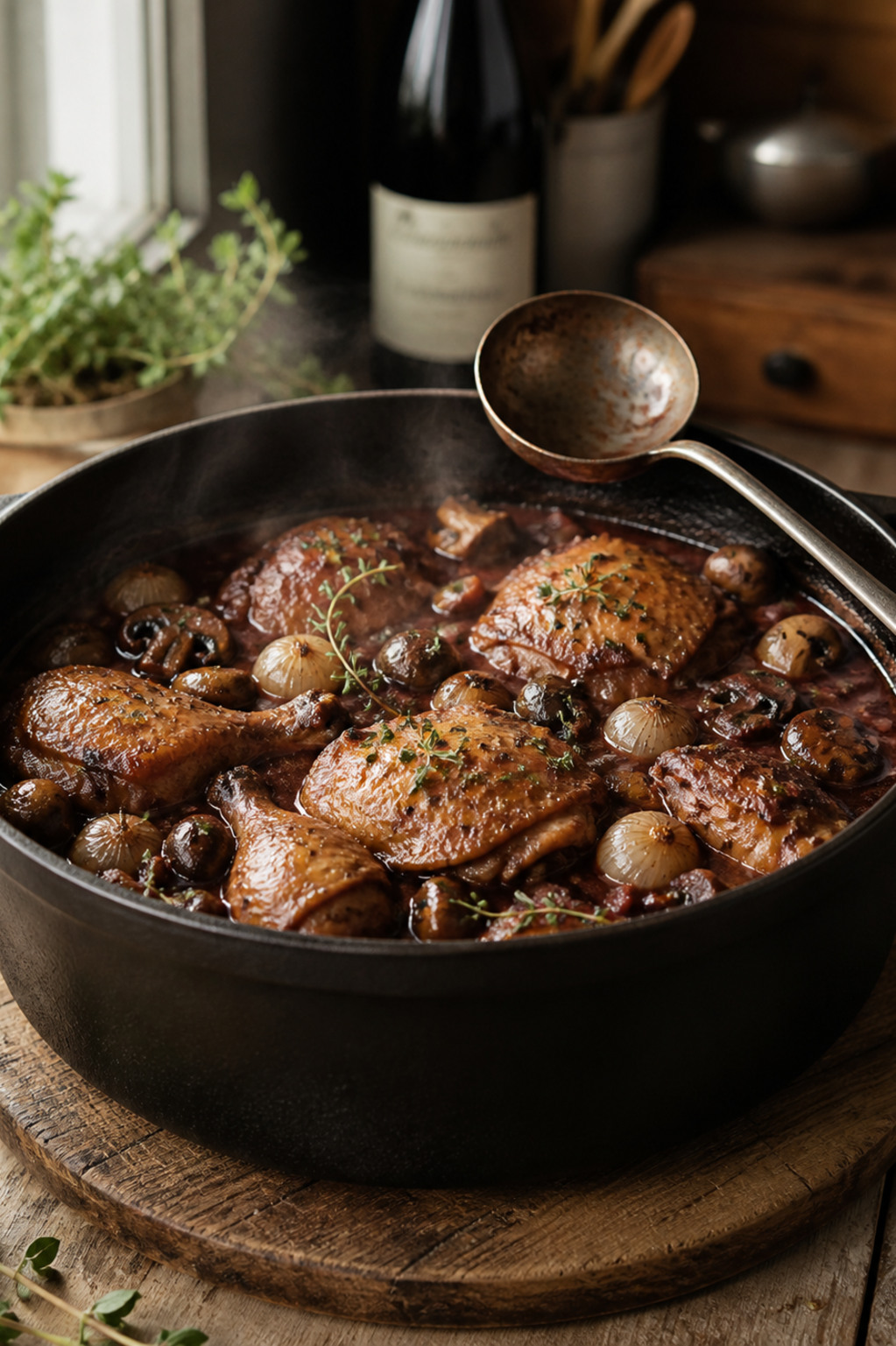
A pepper mill is often the last object reached for, somewhere between carrying a plate to the table and sitting down. That habit makes every grind the same: a hurried twist over eggs, tomato salad, a pan sauce, whatever is nearest. The mill does its job, but grind size never becomes part of the cooking decision.
Specifications
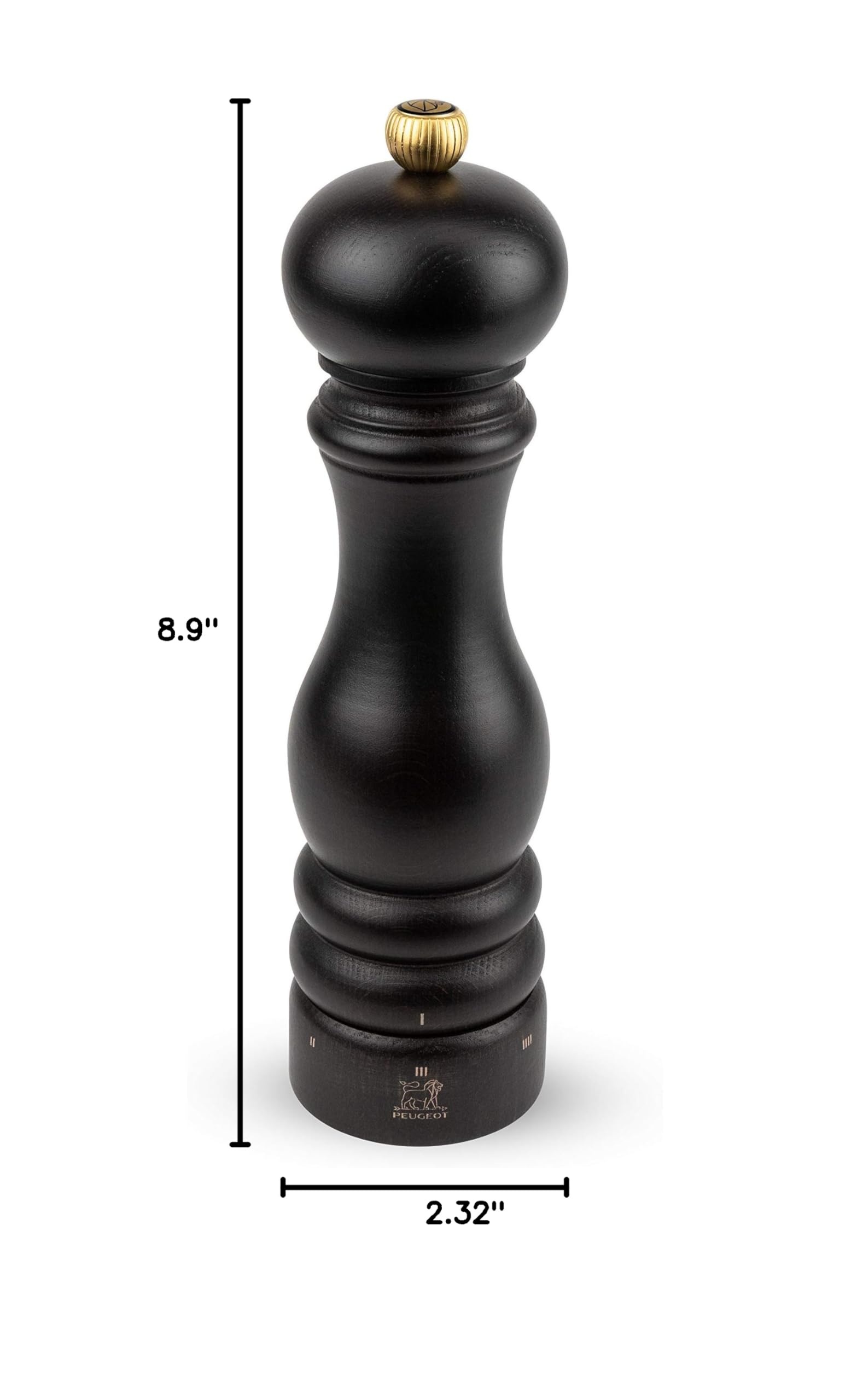
A 9-inch French beechwood pepper mill with Peugeot's steel pepper mechanism and an indexed u'Select ring at the base. It is the classic curved Paris form, made for setting a grind and returning to it.
Why we liked it
The setting stays part of the recipe: fine for a smooth pan sauce, medium for the skillet, coarse at the table. The wood body feels like a kitchen tool rather than a countertop appliance.
The tradeoffs
The wood body should be wiped rather than washed, the top opening rewards a small funnel, and a manual mill is slower than an electric grinder when a recipe needs a large volume of pepper.
Where it works well
One quiet kitchen test changes that. Put parchment on the worktable and make three small piles with the same peppercorns: fine, middle, and coarse. The fine grind spreads like dust and disappears readily into warm butter. The middle setting gives a skillet an even, familiar bite. The coarse grind stays visible and announces itself when it lands on a tomato wedge.
Alternatives
That is the useful case for an indexed mill. Grind size becomes part of the plan instead of a top-screw guess that has to be rediscovered each time. Fine pepper belongs where texture should vanish into a dressing or sauce. A middle grind seasons while food cooks. Coarse pepper is a finish, best used when the little crack of pepper is welcome.
Verdict
The 9-inch Peugeot Paris u'Select is a particularly clear version of the idea. The curved beechwood body is easy to hold, and the adjustment happens at the base rather than at the finial that opens the mill. Peugeot specifies a steel mechanism for whole peppercorns, a dry-cloth care routine, and clockwise turns. Those are modest details, but they keep the tool predictable.
Field note 5
There are honest inconveniences. Refilling a traditional mill is tidier with a small funnel. A wood body cannot be taken to the sink. If a recipe calls for tablespoons of pepper, an electric grinder will get there faster. None of that matters much for daily seasoning, where control and a familiar setting beat raw speed.
Field note 6
Returning the ring to a chosen middle mark after each use keeps the everyday position from becoming accidental. The fine and coarse ends still have jobs, but the default is deliberate. A pepper mill cannot rescue flat cooking on its own; it can, however, make one small decision repeatable. That makes it a sensible mill to keep beside the stove.
03 · Linked objects
The things worth mentioning.
Peugeot Paris u'Select 9-inch Pepper Mill, Chocolate
A 9-inch French beechwood pepper mill with Peugeot's steel pepper mechanism and an indexed u'Select ring at the base. It is the classic curved Paris form, made for setting a grind and returning to it.
The setting stays part of the recipe: fine for a smooth pan sauce, medium for the skillet, coarse at the table. The wood body feels like a kitchen tool rather than a countertop appliance.
Worth knowing: The wood body should be wiped rather than washed, the top opening rewards a small funnel, and a manual mill is slower than an electric grinder when a recipe needs a large volume of pepper.
See the exact item on Amazon