This week's work ·
Shelling peas, stirring risotto, and a Sunday that moved slowly
The shelling peas were fat and sweet, so we spent a lazy Sunday shelling them into a bowl and stirring them into a proper risotto. It took time. That was the point.

The shelling peas showed up at the market in big brown bags, and we bought more than we needed on purpose — shelling peas is a two-person job, the kind of kitchen work that feels like hanging out. We sat at the table with a bowl each, popping the pods, and the pile of bright green peas grew while we talked about nothing in particular.
The risotto took the rest of the afternoon the way risotto does. Arborio rice, warm broth added a ladle at a time, patient stirring, and then at the very end the peas went in — barely cooked, still sweet and bright — along with butter, a shower of pecorino, and a squeeze of lemon.
We ate it in bowls on the couch, which felt like a small rebellion against every rule about proper dinners. It was creamy and green and tasted like spring taking its time.
The lesson was about pace. Some dinners are supposed to be quick, and some are supposed to take an hour of stirring. This one was worth every minute — the slow kind of cooking that slows you down with it.
Some dinners are supposed to be quick, and some are supposed to take an hour of stirring.
02 · The recipe
Spring Pea Risotto
Creamy arborio rice stirred with sweet shelling peas, butter, pecorino, and lemon — a slow Sunday dinner that tastes like spring taking its time.
- Prep
- 15 min
- Cook
- 35 min
- Total
- 50 min
- Yield
- 4 servings
What you'll need
Non-perishable
- 1 1/2 cups arborio rice
- 4 cups vegetable broth
- 1/2 cup dry white wine
- 3 tablespoons unsalted butter, divided
- 1/2 teaspoon fine sea salt
- 1/4 teaspoon freshly cracked black pepper
- 2 tablespoons extra-virgin olive oil
Perishable
- 1 1/2 cups shelled fresh peas (from about 1 1/2 pounds of pods)
- 1 small onion, finely diced
- 1/2 cup grated pecorino romano, plus more for serving
- 1 teaspoon fresh lemon juice
Useful equipment
Method
- Warm the broth in a saucepan over low heat — it should be steaming, not boiling, when it meets the rice.
- In a wide pot, cook the onion in the olive oil and 1 tablespoon of the butter over medium until soft and translucent, about 5 minutes. Add the rice and toast it, stirring, until the edges turn translucent, about 2 minutes.
- Add the wine and stir until it's absorbed. Add the warm broth a ladle at a time, stirring until each addition is absorbed before the next. Keep the risotto at a gentle simmer, not a boil — about 20 minutes total.
- When the rice is tender but still has a little bite, stir in the peas and cook 2–3 minutes, until they turn bright green and sweet.
- Take the pot off the heat. Stir in the remaining butter, the pecorino, salt, pepper, and lemon juice. Rest 2 minutes, then serve with extra cheese and a crack of pepper.
03 · Linked objects
The things worth mentioning.
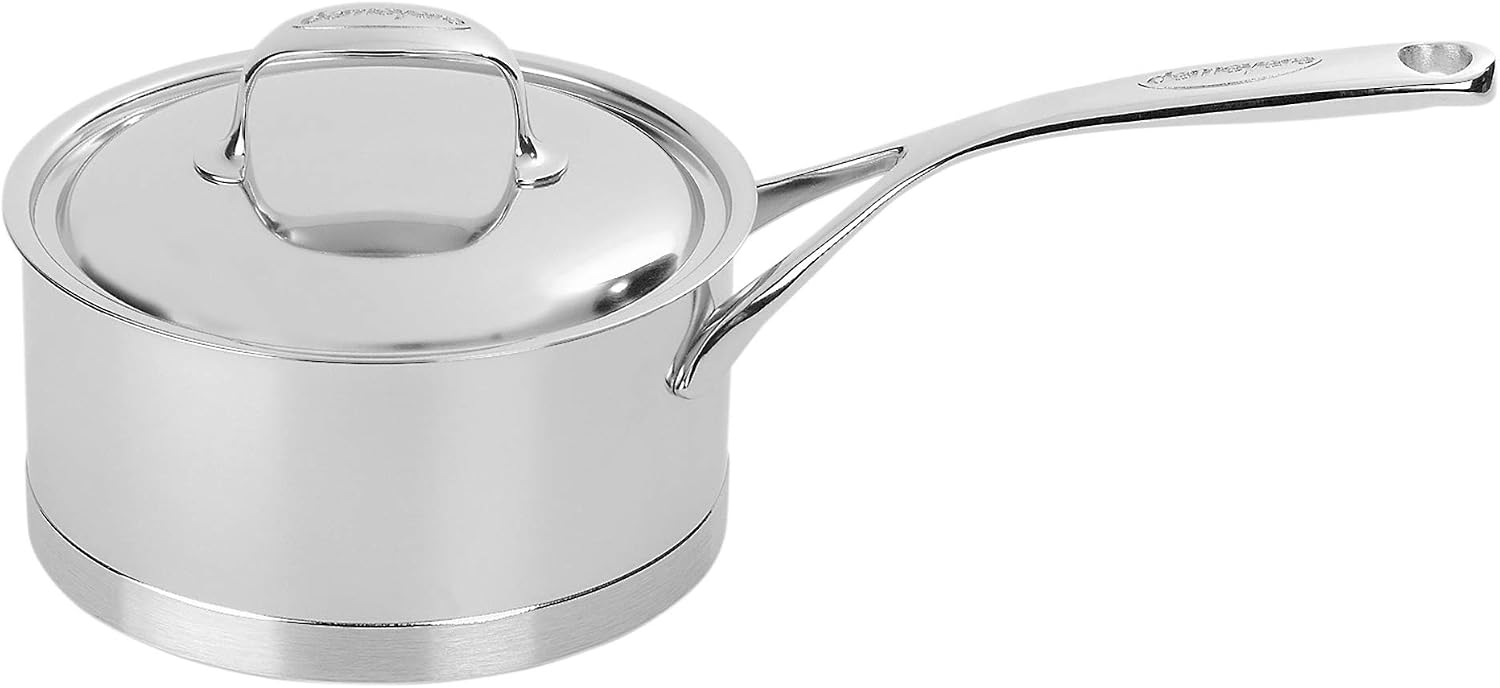
Demeyere Atlantis 3.2 Quart Saucepan with Lid
The heavy-bottomed saucepan is the vessel for the stock and rice simmer.
Why we loved it: We love even heat that lets sauces simmer instead of scorch, a welded handle without food-catching rivets, and dishwasher-safe construction. It's a dependable saucepan when the method needs patience.
Worth knowing: It's heavy, heats up slower than thin pans, and needs a little fat or liquid before high heat. Skip it if you want a lightweight nonstick pan.
See the exact item on Amazon 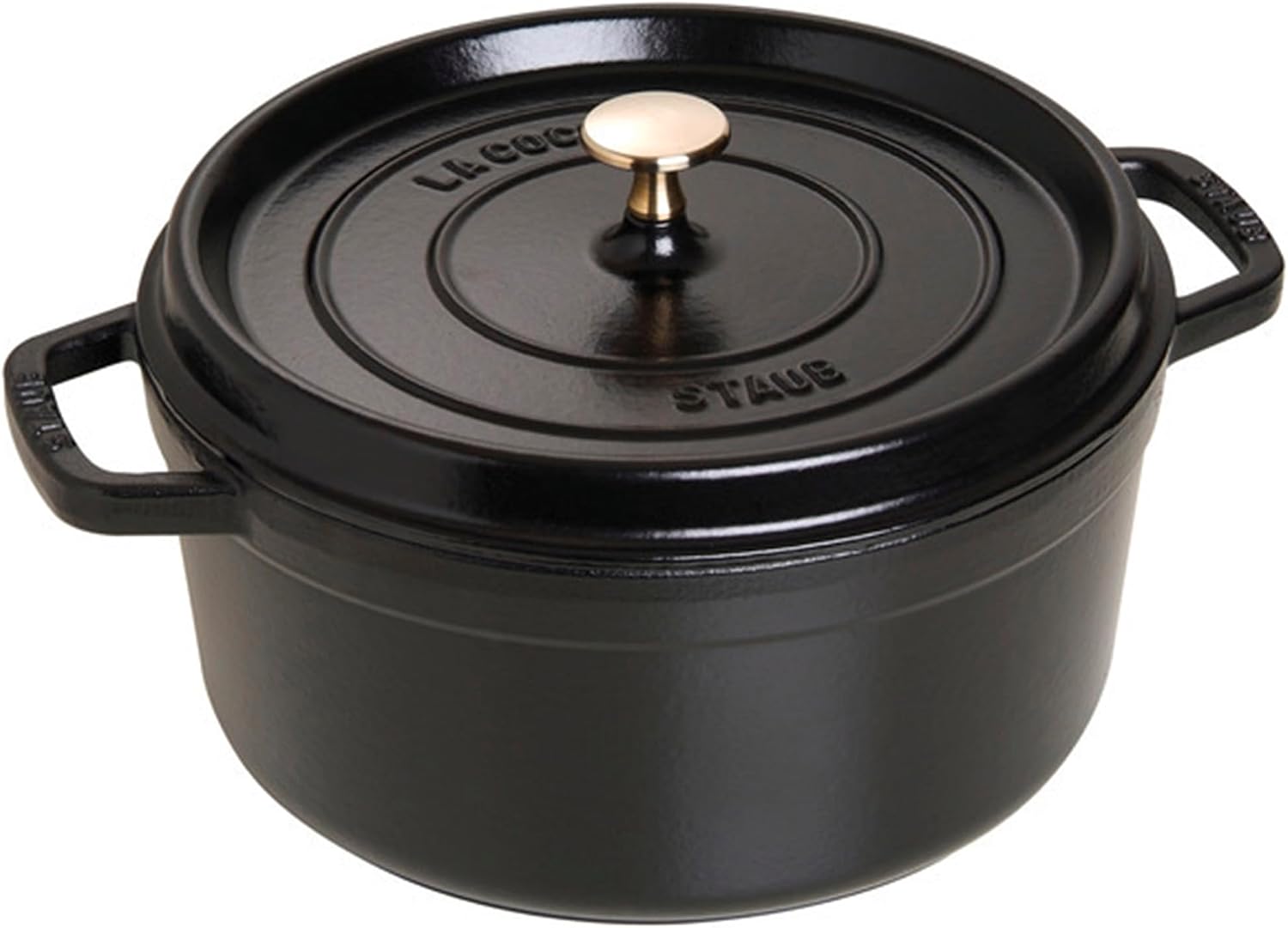
Staub 5.5-Quart Round Cocotte, Matte Black
The 5.5-quart enameled cast iron pot holds the full batch and simmers it steadily.
Why we loved it: We love a pot that sears hard, holds a low oven steady, and moves from stovetop to table without fuss. The self-basting lid helps retain moisture, and the durable build carries the slow risotto stir without scorching.
Worth knowing: It's heavy — a two-hand job when full — and enameled cast iron needs gentle handling and hand washing.
See the exact item on Amazon - T